
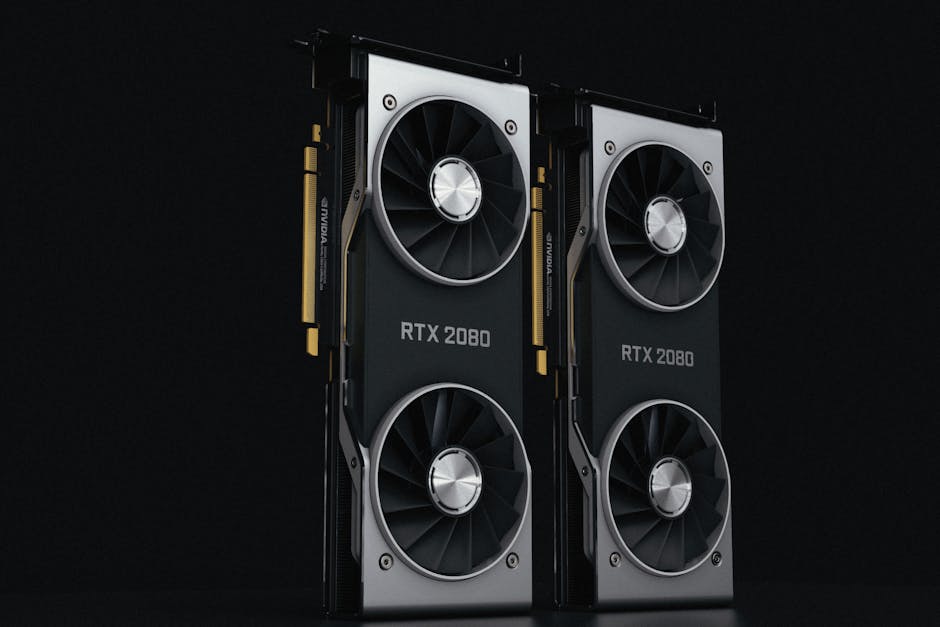
The artificial intelligence (AI) landscape is witnessing a significant shift, with Nvidia and Groq emerging as key players in the race to achieve real-time AI capabilities. According to industry experts, the current wave of AI growth is driven by transformer architecture, but signs indicate that the paradigm is shifting again, with Groq‘s lightning-speed inference technology poised to play a crucial role.
The concept of exponential growth, popularized by Intel‘s co-founder Gordon Moore, has been a driving force in the tech industry. However, this growth is not always smooth, and the AI sector is no exception. The current plateau in CPU performance has given way to the growth of GPUs, with Nvidia‘s CEO Jensen Huang successfully navigating this shift. The company’s focus on gaming, computer vision, and generative AI has positioned it as a leader in the industry. As Anthropic‘s President and co-founder Dario Amodei notes, “The exponential continues until it doesn’t. And every year we’ve been like, ‘Well, this can’t possibly be the case that things will continue on the exponential’ — and then every year it has.”
The introduction of Groq‘s technology is expected to address the latency crisis in AI, where models require significant time to “think” and generate responses. By combining Groq‘s architectural efficiency with Nvidia‘s GPU capabilities, enterprises can achieve frontier intelligence without the penalty of lag. Groq‘s Language Processing Unit (LPU) architecture removes the memory bandwidth bottleneck that plagues GPUs during small-batch inference, delivering lightning-fast inference. This technology has the potential to solve the “thinking time” latency crisis, enabling AI agents to autonomously perform complex tasks, such as booking flights, coding apps, and researching legal precedent, in a matter of seconds.
The potential convergence of Nvidia and Groq‘s technologies could have a significant impact on the industry. If Nvidia integrates Groq‘s technology, it could create a formidable software moat, making it difficult for competitors to catch up. This could also enable Nvidia to offer a universal platform for training and running AI models, further solidifying its position as a leader in the industry. Additionally, the combination of Groq‘s inference power with a next-generation open-source model, such as the rumored DeepSeek 4, could rival today’s frontier models in cost, performance, and speed. OpenAI and other companies may also benefit from this convergence, as it could lead to more efficient and effective AI systems.
The partnership between Nvidia and Groq could also have implications for other companies, such as Ring, which relies on AI-powered systems for its smart home devices. As AI capabilities continue to evolve, companies like Ring may need to adapt to these changes to remain competitive. Furthermore, the growth of AI is not limited to the tech industry, and companies across various sectors may need to consider how to leverage AI to improve their operations and services.
In conclusion, the race to achieve real-time AI capabilities is heating up, with Nvidia and Groq at the forefront. As the industry continues to evolve, it will be interesting to see how these companies navigate the challenges and opportunities presented by this emerging technology. With the potential to revolutionize various industries, the convergence of Nvidia and Groq‘s technologies could be a significant step forward in the development of AI, enabling enterprises to achieve faster, more efficient, and more effective AI systems.











Leave a Reply